
The Weird Dude's Journal: #1
Spring Comes, Learning to See, and Heavy Equipment

Early May in Southern New Hampshire is a weird time. You’re still stuck with a New England spring teasing you: The weather will warm up a bit, but everything is still grey and dreary. But then one day you wake up, go about your daily routine, and then randomly notice that everything is suddenly green! Every year the same thing happens, and every year I’m surprised.
Today as I take my daily walk in the forest behind my homestead, I’m as surprised as ever. The maples are already leafed out and the oaks aren’t far behind. The forest floor is bursting with unfolding fiddle heads and ephemeral wild flowers.
I’m lucky enough to have this forest directly out my backdoor, and even more lucky to be able to walk in it almost every day throughout the year. Spending so much time on the same piece of land has changed how I see the world, and is different from my less frequent hikes up in the White Mountains.
When you go for a hike a in new area, you’re overwhelmed by the novelty of it. New sights, smells, species all flooding your senses. You’re also dealing with navigation. Where does this trail lead? Am I lost? Will I have enough time to take this path and still be home for dinner? And of course, if you’re hiking with people, you’ll be at least partially focused on talking with them.
When you walk the same piece of land at roughly the same time every day, something strange happens. You start to see. The landscape is no longer a static backdrop for your recreation, it’s living story that’s unfolding in front of you. You watch it change throughout the seasons, and if you pay attention you start to notice incredible levels of detail. The woods is no longer the woods, it’s a specific place, made up of specific living things, with a very specific character.
“My” woods were once under about a mile of glaciers during the last ice age. The evidence of this is everywhere, from the type of soil underneath the forest, to the shape of the landscape, and the way boulders are placed on it. After the glaciers retreated, the forest changed many times with the climate and the coming and going of various species. By the time the first colonists arrived, it would have been dominated by white pine, northern red oak, eastern hemlock, and American chestnut, with sugar maple, yellow birch, and beech also abundant.
As I walk through the forest today, all of those species are still present! Even the American chestnut, which once lived high up in the canopy, is still fairly abundant, if you know where to look. Its new home is in the under-story as a large shrub, which the blight kills down to the stump every 20 years or so.
Of course this forest is still young and a new addition to the landscape. For most of the past 300 years there was no forest here at all. The land in this old town was completely cleared for agriculture, and this is also evident everywhere you look. New England is crisscrossed with old stone walls that marked property lines and pasture fences. In these woods alone, you’ll find old stone wells, the remains of old foundations, bits of iron and glass from old homesteads, and even the bodies of long forgotten colonists.
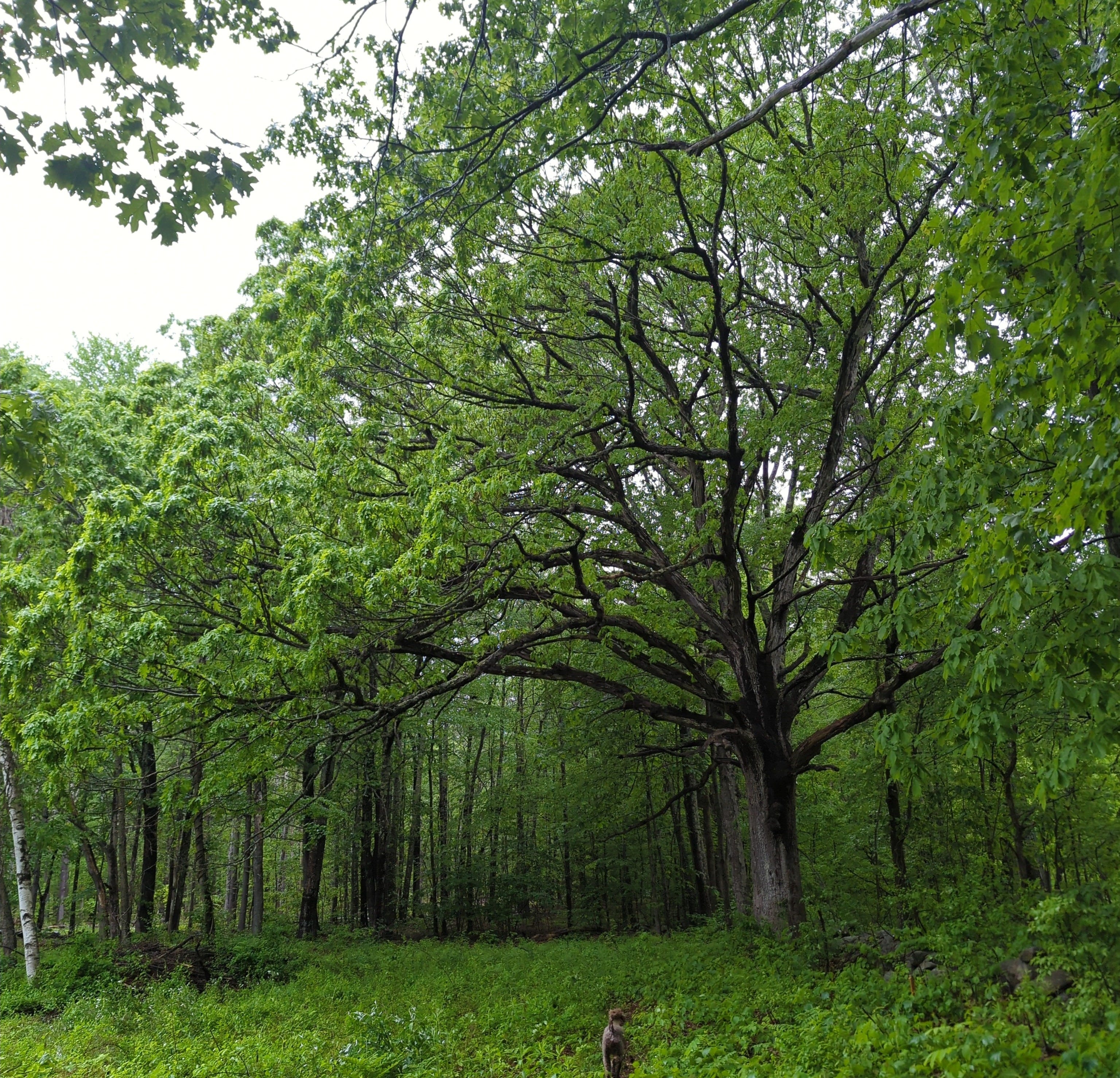
Yet the farms were abandoned decades ago and the forest has returned. Although not in its original form. A quick glance would tell you that this forest was recently logged for its valuable hardwoods. The selective cutting was done in lanes, with the oldest and most valuable trees taken in strips, and the younger less valuable parts of the forest left standing to regenerate.
In the logged areas, the stumps of massive oaks, beeches and sugar maples are surrounded by the left behind branches and slash. Great muddy ruts created by heavy equipment like Feller Bunchers and Skidders are carpeted in white pine seedlings and burnweed. The forest, if allowed, will eventually overcome these scars, but it will also be shaped by them.
On a homestead or in a forest, a machine can be a wonderful thing. It can turn days of back breaking labor into a few hours of work. It can put money in your pocket and gives you back time to walk in the woods.
But it also blinds you to what’s around you, and the raw power of a large machine can go to your head. To a hammer everything looks like a nail, and to a man with an excavator or tractor, everything can be solved with it!
Take this pile of branches. There was once some kind of small shed-like structure here. Rather than demolish and remove it, the logging crew simply knocked it over and pushed it in with this pile of slash.
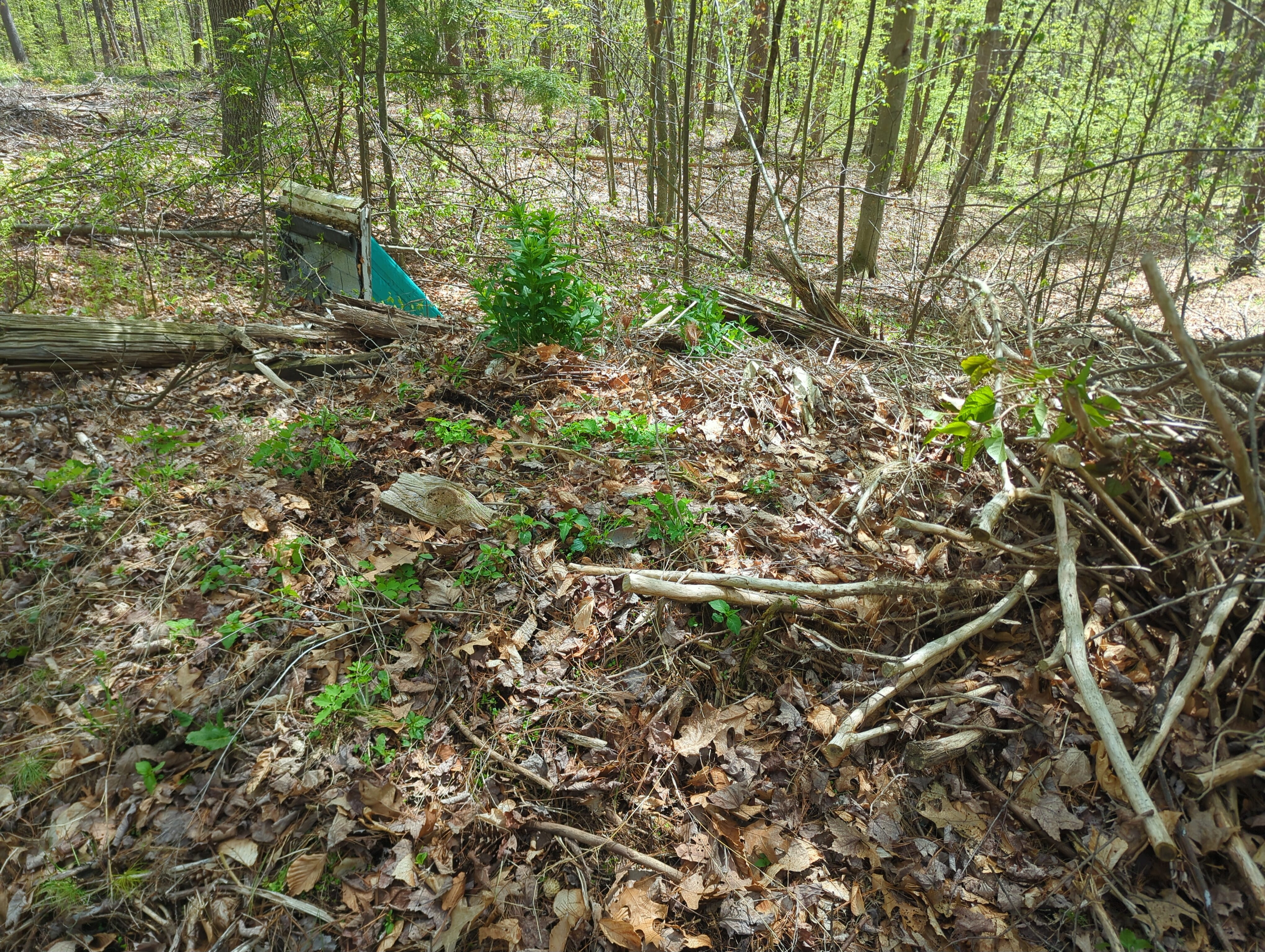
Now this isn’t the end of the world, but it does indicate a certain way of viewing things. The plastic, pressure treated wood, and iron nails are mostly out of sight. But in 50 years, if this is someone’s backyard and a child is digging in their garden, will they cut their hand on the glass buried here? Or if this land remains mostly wild, will the plastic resurface and choke a bird that mistakes it for food?
And there are more immediate consequences to working on the land while being blind to it.
I was walking by this pile of slash and rubble, when I noticed a very interesting plant sticking out of the heap. Japanese knotweed.
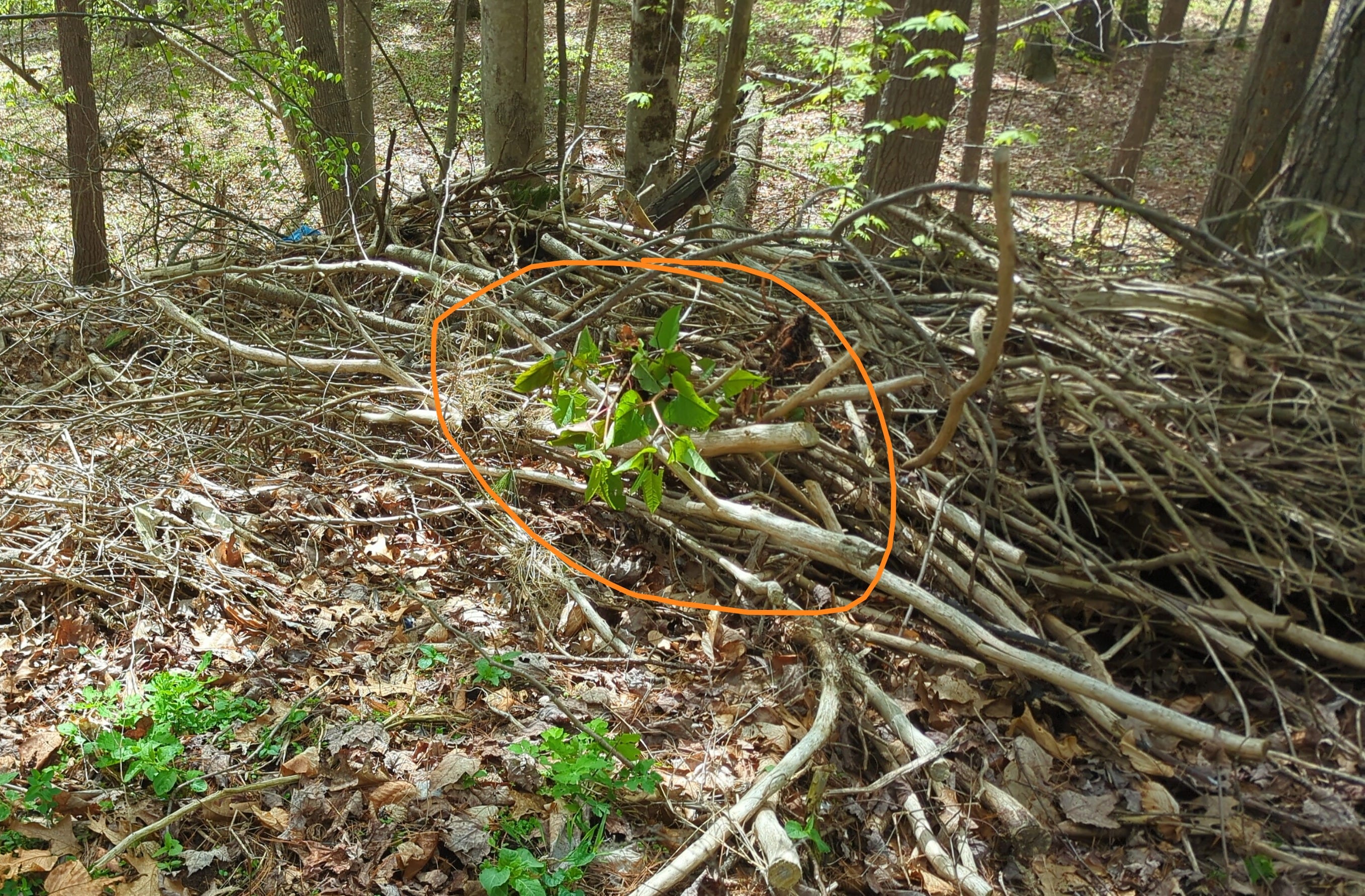
This is an incredibly aggressive invasive plant that quickly chokes out most other species if it’s allowed to spread. It often forms dense monocultures on roadsides and areas disrupted by human activity. However, it’s uncommon to find it deep inside forests. It likely hitched a ride on the heavy logging equipment, and set up shop in a heavily disrupted area where the native plants hadn’t had a chance to recolonize.
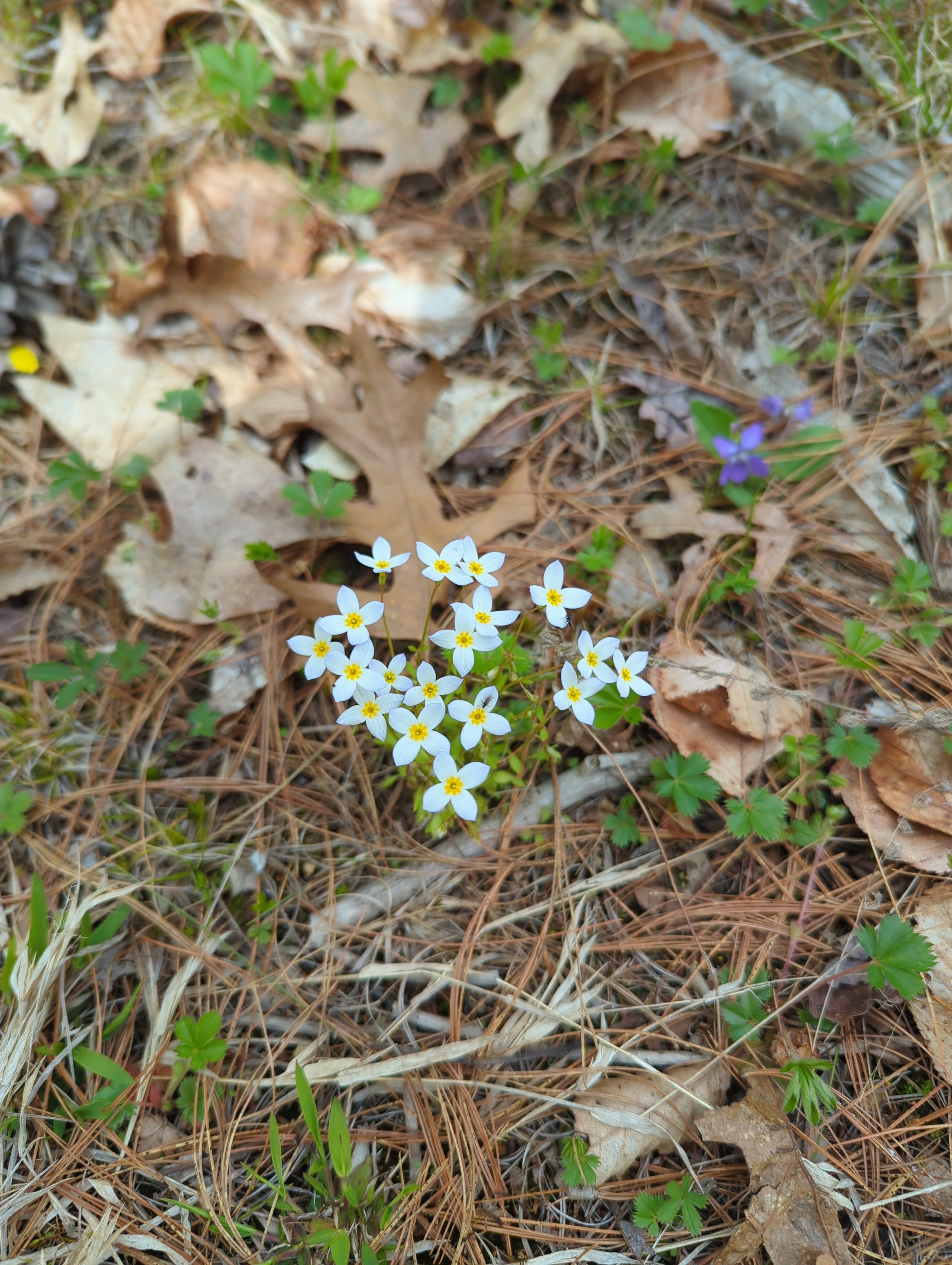
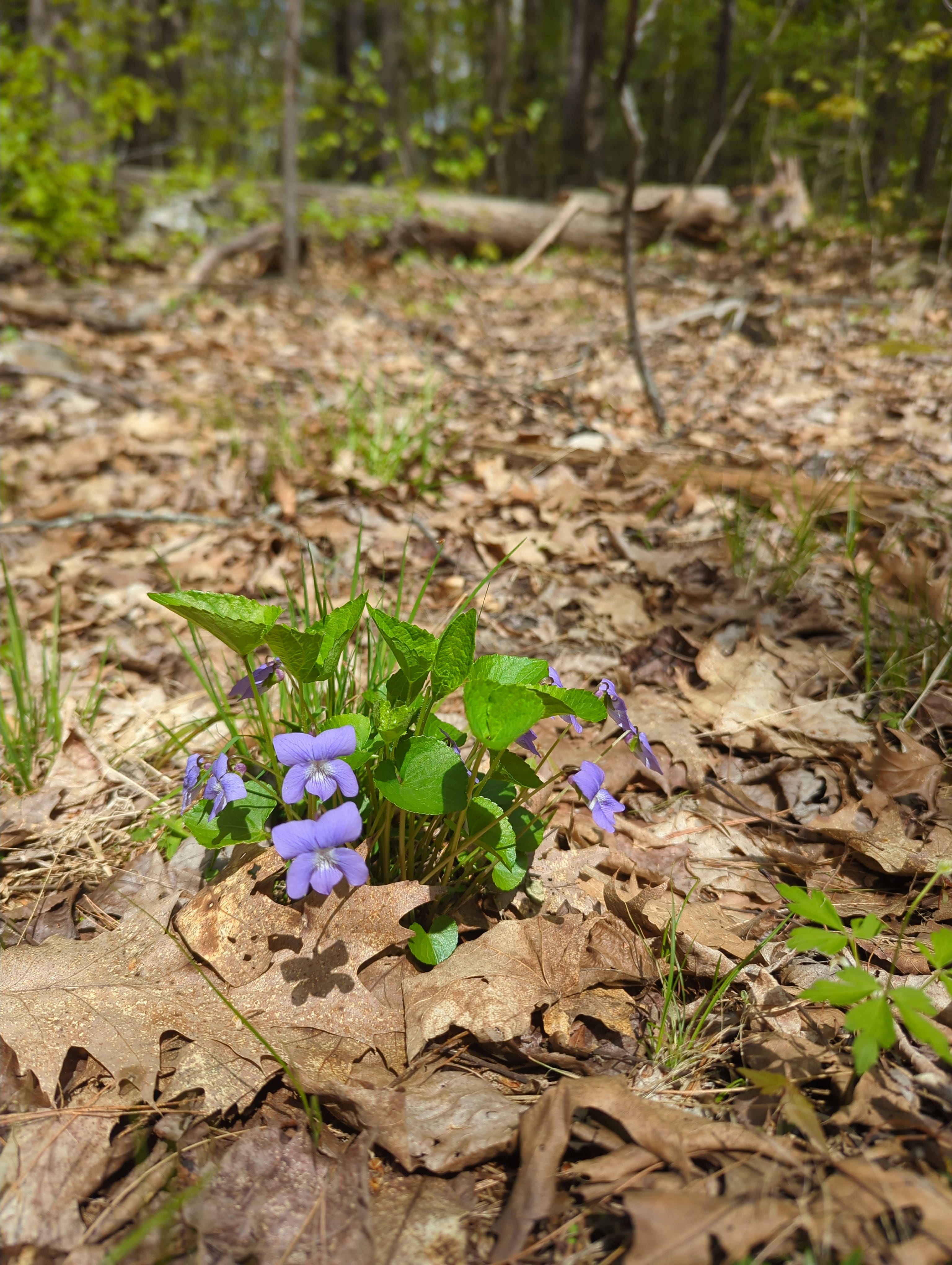
Two native flower species 20 feet from the knotweed, Azure Bluet and Common Violet
Whenever I’m walking in any forest, I make a point to pick up trash and pull any invasives I see. It’s my way of giving back to the places I love. Luckily I caught this infestation early. Looking around I found several more sprouts, but none had yet fully established themselves.
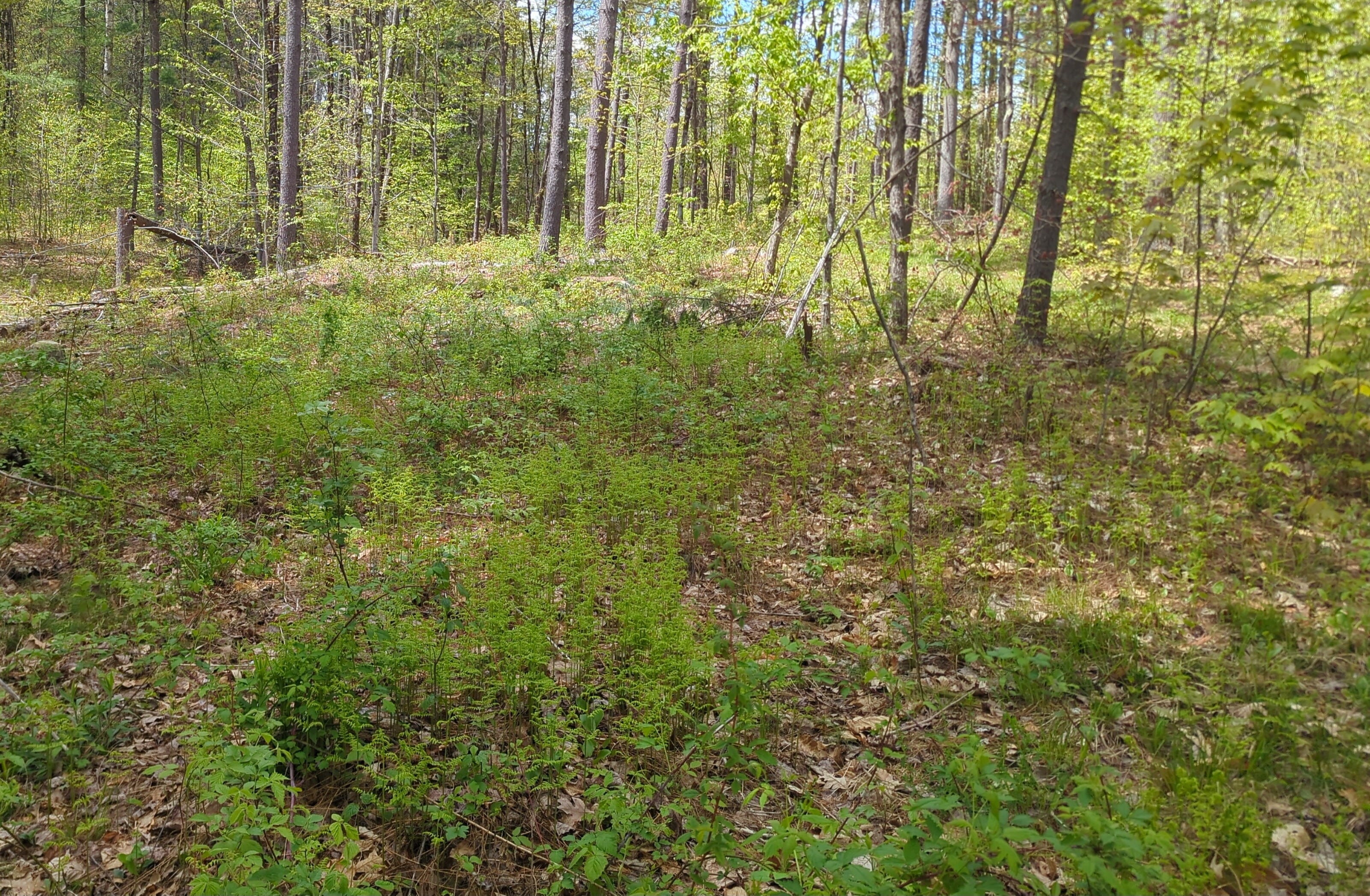
If left unchecked, this clearing full of native ferns and black raspberries could have ended up like this:
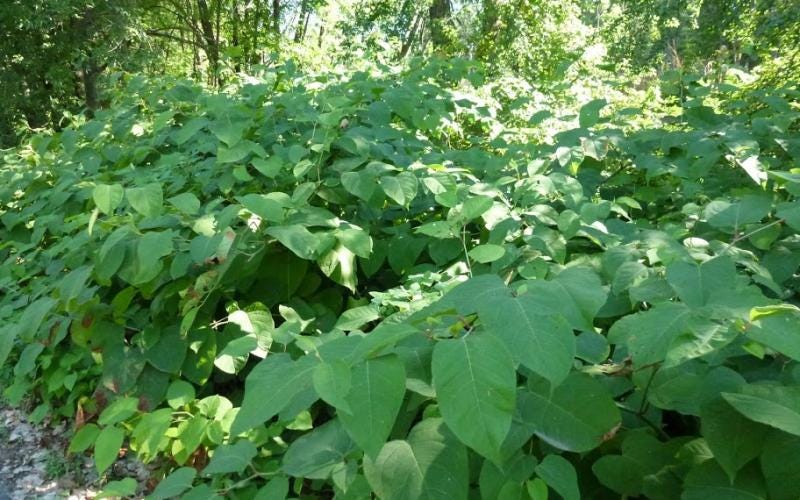
Thankfully the worst has been avoided, but only because I happened to be paying attention.
It seems to me that the way we’ve structured our lives has clouded our vision. We can be surrounded by so much, yet see and understand so little. I don’t know if that’s the moral to this story, but it seems like something I should ponder on. For now though, I think I’ll go for a walk.
Ponder On That is a reader-supported publication. To receive new posts and support my work, consider becoming a free or paid subscriber.